What Is a Surveillance System Solution, and How Is It Useful?
Crime is a persistent threat that business owners must constantly address. From robberies to internal theft, malicious individuals can damage property and assets in numerous ways.
That is why maintaining up-to-date security protocols and staying one step ahead is essential. And it all begins with video surveillance.
Today, having video surveillance equipment to monitor your premises 24/7 is no longer optional—it is a basic requirement for doing business. Without proper surveillance, companies expose themselves to unnecessary risks and become easy targets for criminal activity.
Let’s begin by answering this important question: What is video surveillance, and what role does it play in a complete surveillance system?
What Is a Surveillance System?
A surveillance system is a security technology that uses cameras, sensors, and monitoring software to observe and record activities within a specific environment. These systems are designed to enhance safety, deter criminal behavior, and provide reliable evidence for investigations, compliance, or policy enforcement.
Benefits of Surveillance Systems
Modern surveillance solutions often operate 24/7 and use local or cloud-based storage to archive video footage securely. Advanced systems may include features such as motion detection, real-time alerts, facial recognition, and automated tracking powered by artificial intelligence.
Surveillance systems are widely used in both private and public environments, ranging from offices and retail stores to parking facilities, public roads, and critical infrastructure. Their purpose extends beyond threat detection to supporting regulatory compliance, operational oversight, and broader public safety initiatives.
Increase Safety and Security
If you ask someone, “What is the primary purpose of a surveillance camera?”, the most likely answer would be security. Digital video monitoring enables continuous observation of offices or buildings, particularly critical areas such as entrances, back doors, and secure storage locations. This level of visibility helps detect and prevent potential wrongdoing in sensitive areas.
Some surveillance systems can also be configured to send real-time alerts when unauthorized activity is detected. This capability allows security personnel or law enforcement to respond quickly to potential threats—sometimes even before an incident occurs.
Perhaps the greatest value of video surveillance lies in its deterrent effect. When a potential intruder notices a visible camera at an office entrance, they are far less likely to attempt a break-in, knowing their actions could be recorded and used as evidence.

Boost Productivity
Surveillance cameras are effective not only in deterring criminal behavior but also in reducing unproductive activities. Their presence alone can encourage employees to remain focused and adhere to workplace policies.
For example, visible cameras may discourage time-wasting behaviors such as excessive mobile phone use, unauthorized breaks, or unnecessary lingering. As a result, employees are more likely to devote their time and attention to productive tasks.
In retail environments, surveillance systems can also help monitor customer service performance. Management can review footage to ensure staff follow established protocols during customer interactions and use these observations to support training and performance improvement.
Provides Valuable Evidence
High-resolution imaging can enable cameras to capture images with greater clarity, defined edges, and more visible details. That is important for several reasons.
One, it allows for easier identification. High-resolution cameras can capture facial features, license plates, signs, and other details that would be blurred in lower-resolution cameras. That is particularly important in law enforcement and security.
Another benefit is that high-resolution cameras can cover larger areas without sacrificing quality. That is ideal if you’re surveilling a larger room or warehouse. It also gives you the ability to zoom into farther objects.
Streamlines Operations
Video surveillance is a powerful tool for continuously optimizing a company’s operations and processes. For example, manufacturing facilities can install cameras along production lines and around critical equipment to improve visibility and control.
This setup allows engineers and plant managers to monitor the manufacturing process from a centralized location. In some cases, surveillance systems can even generate alerts when irregularities or disruptions occur, enabling issues to be addressed promptly and minimizing downtime.
Integrating video surveillance with access control systems can further streamline operations by automating employee verification through visual confirmation. This integration improves access management efficiency while reducing the risk of unauthorized entry and security breaches.
Top Features of Video Surveillance Solutions
Now that we’ve answered the question, “What are surveillance system solutions useful for?”, let’s take a closer look at the essential features to consider when choosing an effective video surveillance solution.
High-Resolution Imaging
High-resolution imaging enables surveillance cameras to capture footage with greater clarity, sharper edges, and more visible detail. This capability is important for several reasons.
First, it allows for easier and more accurate identification. High-resolution cameras can clearly capture facial features, license plates, signage, and other critical details that may appear blurred or indistinct in lower-resolution footage. This level of detail is especially valuable in security monitoring and law enforcement investigations.
Another key advantage is broader coverage without compromising image quality. High-resolution cameras can effectively monitor larger areas, such as warehouses or expansive rooms, while still allowing operators to zoom in on distant objects and retain usable detail.
Motion Detection
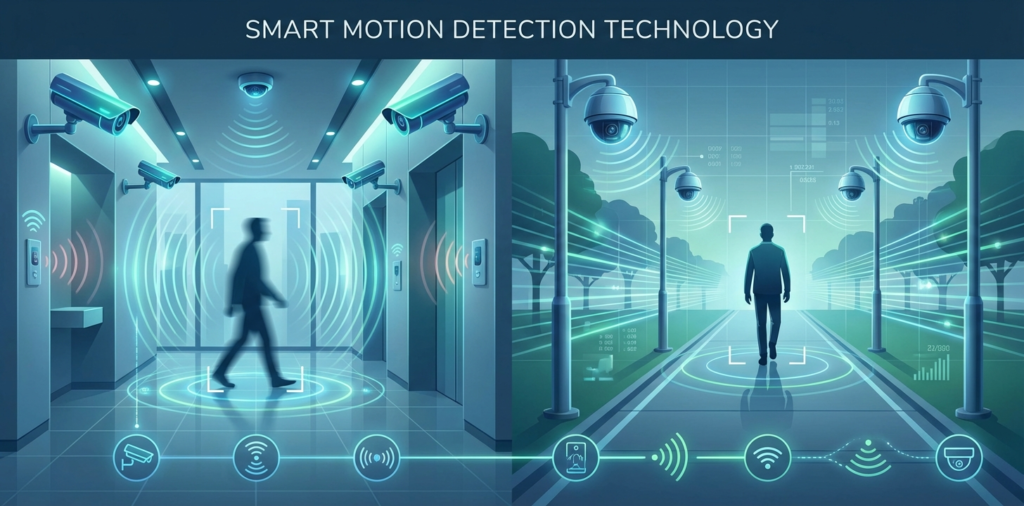
Motion detection technology enables surveillance cameras to identify movement within their field of view. When motion is detected, the system can automatically trigger specific actions, such as sending alerts or initiating recording. This makes motion detection an effective early warning feature for unattended areas, such as a front porch at night or a warehouse after business hours.
In addition to enhancing security, motion detection also improves operational efficiency. By recording only when movement occurs, cameras conserve energy, bandwidth, and storage capacity, ensuring that resources are used solely for relevant and actionable footage.
Night Vision
Night vision is a technology that enables surveillance cameras to operate effectively in extremely low-light or no-light conditions. This capability is critical, as many organizations need to monitor areas with limited lighting, such as offices after hours or outdoor spaces at night.
By ensuring clear visibility in challenging lighting environments, night vision helps prevent important events from being missed, regardless of conditions. It is especially vital in mission‑critical applications such as traffic monitoring, search and rescue operations, security enforcement, and wildlife observation.
Remote Access and Control
Remote access and control enable operators to monitor and manage surveillance systems from virtually any location. This feature is especially beneficial for organizations with multiple properties or office locations.
By centralizing monitoring activities, security teams can oversee all sites from a single hub, reducing the need for on‑site monitoring equipment and personnel. This approach improves operational efficiency while maintaining consistent oversight across locations.
Another key advantage of remote access is faster incident response. For example, surveillance systems can be configured to send real-time alerts or notifications to authorities, allowing police or security personnel to respond immediately during security incidents.
Components of Digital Video Surveillance Systems
Now, let’s take a closer look at the essential components that make up an effective digital video surveillance system.
CCTV Cameras
When people ask, “What is a surveillance camera?”, they are usually referring to a CCTV camera. Closed‑circuit television (CCTV) cameras are among the most essential components of a surveillance system, serving as the “eyes” that monitor and capture events as they occur.
The term CCTV means that video signals from the camera are not broadcast publicly, but instead transmitted to a limited set of monitors or recording devices. This closed transmission helps ensure privacy and security.
Cameras can be fixed in a specific location and angle, or equipped with PTZ (pan‑tilt‑zoom) and varifocal capabilities. With these advanced features, operators can remotely adjust the camera’s field of view or zoom level to enhance coverage. Proper camera placement is essential to achieve maximum visibility and effectiveness.
Traditionally, CCTV cameras were wired directly to monitoring and recording systems. However, an increasing number of modern cameras now support wireless connectivity, allowing for greater flexibility in installation and placement.
Digital Video Recorders
Digital video recorders are responsible for capturing, encoding, transmitting, and storing video data in a digital format, making them a core component of modern surveillance systems.
One critical device in this category is the Digital Video Recorder (DVR). A DVR converts analog video signals from CCTV cameras into digital files and stores them on a hard drive for later review.
For systems that use IP or wireless cameras, a Network Video Recorder (NVR) is typically used instead. In addition to recording, these devices provide playback capabilities for reviewing footage, which can be accessed and managed through Video Management Software (VMS).
Sensors
Sensors are devices used to measure environmental conditions beyond visual data, which is handled by the camera itself. When predefined thresholds are met, these sensors can trigger specific actions within the surveillance system.
For example, some cameras are equipped with light sensors that automatically adjust camera settings based on ambient lighting conditions. Others may include infrared (IR) sensors to detect heat signatures, enhancing visibility and detection capabilities.
Additional common sensors used in surveillance systems include glass‑break sensors for identifying potential forced entry, environmental sensors that monitor changes in humidity or air quality, and pressure sensors designed to detect movement in areas such as driveways or restricted zones.
Cabling and Connectors
Cabling and connectors are responsible for transmitting data, video signals, and power between the various components of a surveillance system. Without proper cabling, the system cannot function effectively.
However, not all cables and connectors are suitable for surveillance applications. These systems require durable cabling that can withstand wear and tear over time. In addition, outdoor cameras must use cables and connectors designed to resist harsh weather conditions such as rain, snow, extreme heat, and cold.
Surveillance systems typically rely on five main types of cabling: coaxial, Ethernet, fiber optic, power, and HDMI. Each serves a specific purpose within the system. For example, HDMI is commonly used to transmit high‑resolution audio and video, while coaxial cables are designed to carry signals reliably over longer distances.
Get a Top‑Notch Security System from Signal Solutions
Let Signal Solutions equip your business with one of the most reliable surveillance systems in the San Francisco Bay Area. We use the latest technology from trusted manufacturers such as Axis Communications, Milestone, and Brivo.
Unlike most resellers, we also bring the experience and technical expertise required to install these systems properly on your property. We can even help design and implement supporting infrastructure, including structured cabling, in‑building cellular boosters, and wireless networking.
Our knowledgeable team, quality workmanship, and timely service set us apart from the competition. That’s why high‑tech enterprises and growing startups alike have trusted Signal Solutions since 1987.
As data and AV specialists, we are always ready to take on the next challenge. Learn more about our commercial security camera installation services today.