In today’s highly interconnected networking environments, network servers serve as the backbone of data exchange, resource sharing, and service delivery across multiple systems. These specialized platforms coordinate communication between devices, manage access to shared resources, and ensure that network operations run smoothly and efficiently.
Working in close integration with Servers & Network Equipment, network servers help maintain stable connections, optimize performance, and support secure data transmission within both small and large-scale infrastructures. Understanding how these systems function is essential for building reliable and scalable networks.
This article explores network servers in detail by examining their core definition, primary types, key features, operational mechanisms, and overall significance in modern computer networks, providing a clear and comprehensive perspective on their role in today’s digital ecosystem.
What Is a Network Server
A network server is a specialized computing system or software environment designed to centrally manage, control, and distribute shared services and resources to multiple connected devices, known as clients, within a network. Unlike standard client computers that focus on individual user tasks, network servers are engineered for continuous operation, high availability, and consistent performance in network‑driven environments.
At its core, a network server functions as the central coordinator of network activities, enabling efficient communication and structured resource sharing among connected clients. By hosting applications, data repositories, and essential network services, it ensures that authorized users can access resources securely and reliably. When integrated with Servers & Network Equipment, network servers contribute to a stable, scalable, and well‑protected network infrastructure capable of supporting growing operational demands.
From a hardware perspective, FS offers a broad range of server solutions tailored to different deployment scenarios. Rack Servers are commonly used in data centers due to their space‑efficient design, while GPU Servers are optimized for high‑performance computing and graphics‑intensive workloads. Tower Servers provide a practical option for small and mid‑sized businesses or remote offices, and High‑density Servers are built to deliver maximum computing power in environments where physical space is limited. Each server type addresses specific performance and scalability requirements, enabling organizations to choose solutions that best align with their operational goals.
The Applications of Network Servers
Network servers form the backbone of numerous digital services used across a wide range of industries. By centralizing computing resources, data storage, and network services, they allow organizations to operate efficiently, securely, and at scale. The following use cases highlight the practical importance of network servers in modern IT environments.
Web Hosting
Network servers are widely used to host websites and deliver online content to users around the world. They ensure high availability, fast response times, and reliable performance, making them essential for businesses and platforms that rely on a strong and continuous online presence.
Centralized File Storage and Collaboration
By providing a single, secure location for storing files, network servers simplify document management and access control. This centralized approach supports teamwork, enables real‑time collaboration, and allows users to securely access shared data from different locations.
Database Services
Database servers manage the storage, organization, and retrieval of large datasets. They enable fast and reliable data processing, which is especially critical in industries such as finance, healthcare, and retail where data accuracy and availability directly impact daily operations and decision‑making.
Email and Communication Systems
Email servers handle organizational communication by managing the transmission, storage, and security of email messages. They support both internal collaboration and external communication while helping maintain data integrity and privacy.
Application Hosting
Application servers provide the foundation for running enterprise software and business applications. From customer management systems to internal operational tools, these servers ensure consistent performance and multi‑user accessibility across the network.
Virtualization and Resource Efficiency
Network servers support virtualization technologies that allow multiple virtual machines to run on a single physical system. This improves hardware utilization, reduces costs, and increases flexibility, particularly in data center and cloud environments.
Media Streaming Services
Media servers are designed to store and distribute audio and video content efficiently. They power video‑on‑demand platforms, live streaming services, and content delivery networks, ensuring smooth playback and minimal latency for end users.
Online Gaming Infrastructure
Gaming servers manage real‑time interactions, player data, and game logic in multiplayer environments. Their stability and low‑latency performance are crucial for delivering responsive and immersive gaming experiences.
E‑commerce Platforms
In online retail environments, network servers handle user authentication, transaction processing, and order management. They play a critical role in maintaining secure, scalable, and reliable e‑commerce systems.
Supporting Remote Work
Network servers enable remote and hybrid work by providing services such as VPN access, remote application usage, and secure file sharing. These capabilities allow employees to remain connected and productive regardless of location.
Overall, network servers—when deployed alongside Servers & Network Equipment—serve as indispensable components of modern IT infrastructures, supporting scalability, efficiency, and innovation across virtually every sector.
How Network Servers Are Evolving
Network servers are undergoing rapid transformation as emerging technologies and growing digital demands reshape modern IT infrastructures. These developments are changing how servers are designed, deployed, and managed, enabling them to better support dynamic business environments and advanced technological workloads. The following trends highlight the key directions shaping the future of network servers.
Virtualization and Cloud Adoption
Virtualization and cloud computing have fundamentally altered server architectures. By decoupling software from physical hardware, organizations can allocate resources dynamically, scale services efficiently, and deploy applications with greater agility. Cloud‑based network servers also enable remote accessibility, supporting distributed teams and flexible work environments.
Advanced Security Capabilities
With the rise of complex cyber threats, modern network servers are integrating stronger security frameworks. Built‑in encryption, granular access controls, and real‑time threat monitoring are becoming standard features. Automated updates and patch management further enhance protection by reducing vulnerabilities and maintaining system integrity.
Focus on Energy Efficiency and Sustainability
Environmental responsibility is now a major consideration in server design. Contemporary network servers are engineered to minimize power consumption through energy‑efficient components, intelligent workload balancing, and advanced cooling technologies. These improvements reduce operational costs while supporting greener data center practices.
Automation and Smart Server Management
Automation is transforming how network servers are managed. Intelligent management platforms can continuously monitor performance, anticipate hardware failures, and optimize resource utilization. This shift reduces manual administrative effort and allows IT teams to focus on strategic planning rather than routine maintenance.
Growth of Edge Computing
Edge computing is redefining server deployment models by bringing processing capabilities closer to data sources. Edge‑based network servers reduce latency and improve bandwidth efficiency, making them ideal for IoT applications, real‑time analytics, and services that require immediate data processing.
Enhanced Scalability and Performance
Advancements in processors, memory technologies, and high‑speed storage have significantly increased server performance. Modern network servers are designed to scale seamlessly, enabling them to handle expanding workloads while maintaining consistent speed and reliability.
Software‑Defined Networking (SDN) Integration
SDN is reshaping traditional networking by separating control logic from physical infrastructure. When combined with modern servers, this approach enables faster network configuration, improved traffic control, and simplified management of complex network environments.
Overall, network servers—working in close coordination with Servers & Network Equipment—continue to evolve in response to technological innovation. Through virtualization, stronger security, sustainable design, automation, edge computing, scalable architectures, and software‑defined networking, modern network servers are becoming more flexible, resilient, and capable of supporting the next generation of digital services.
How Network Servers Work
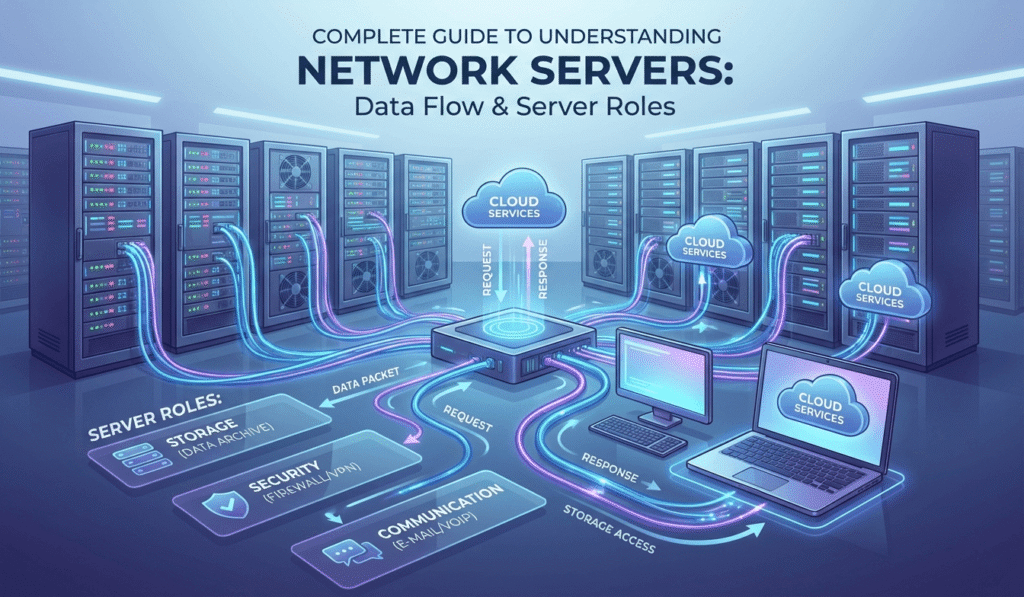
Network servers function as the core infrastructure of computer networks, enabling communication, coordination, and resource sharing between connected devices. Their operation follows a structured process that ensures efficiency, reliability, and security across the network.
Request Reception:
Network servers constantly listen for incoming requests from client devices. These requests may involve accessing shared files, using network-based applications, retrieving emails, or sending queries to databases. Each request represents a demand for specific network or computing resources.
Request Processing and Response Delivery:
After receiving a request, the server evaluates its nature and determines the resources required to fulfill it. By utilizing its operating system, applications, and hardware components, the server processes the task and sends the appropriate response back to the client. For example, a web request results in the delivery of web content, while a database request triggers data retrieval and structured results.
Resource Allocation and Load Handling:
Network servers are designed to manage multiple requests simultaneously. They dynamically allocate processing power, memory, storage, and bandwidth to ensure smooth operation. Task prioritization and workload balancing help maintain stable performance, even during periods of high demand.
Network Control and Administration:
Beyond request handling, network servers perform essential administrative functions. These include assigning IP addresses, managing data traffic, and enforcing network protocols that ensure reliable communication. Servers also regulate access by applying permission policies so that only authorized users and devices can utilize network resources.
Security Enforcement:
Security is a fundamental aspect of server operation. Network servers implement authentication and authorization mechanisms, encrypt data during transmission and storage, and monitor activity for potential threats. Intrusion detection and prevention tools help protect the network from unauthorized access and cyberattacks.
Monitoring and Maintenance:
To ensure continuous availability, network servers are regularly monitored by administrators or automated systems. Performance metrics are analyzed, issues are resolved proactively, and updates or security patches are applied. Routine maintenance plays a critical role in preventing downtime and preserving long-term system stability.
In summary, network servers act as the central control point within modern networks. By combining intelligent request handling, efficient resource management, and strong security practices—alongside Servers & Network Equipment—they enable seamless communication, collaboration, and dependable network operations.
How to Create a Network Server
Building a network server requires careful planning and structured implementation to ensure reliable performance, security, and long‑term scalability. The following steps outline a practical approach to setting up a network server within an organizational environment.
Define the Server’s Role:
The first step is to clearly determine the server’s intended function. Whether it will be used for file sharing, hosting websites, managing databases, or running business applications, the server’s role directly influences all technical decisions that follow.
Choose Appropriate Hardware:
Hardware selection should align with the server’s workload and performance expectations. Key components such as the processor, RAM, storage type, and network interface must be chosen to support current demands while allowing room for future growth.
Select a Suitable Operating System:
Choosing the right operating system is critical for stability and security. Windows Server is often preferred for its ease of management in enterprise environments, while Linux-based systems are valued for flexibility, performance, and strong security controls.
Configure Network Parameters:
Proper network configuration ensures smooth communication across devices. This includes assigning a static IP address, configuring DNS settings, and defining subnet masks and gateways to establish reliable and predictable network connectivity.
Install and Set Up Server Applications:
Once the operating system is in place, the necessary server software should be installed and configured. Web servers, database engines, or application platforms must be optimized based on expected usage, traffic levels, and performance requirements.
Implement Security Controls:
Security should be integrated from the beginning. This involves configuring firewalls, defining user permissions, enabling encryption, and ensuring that the system is prepared to receive regular updates and security patches to reduce potential vulnerabilities.
Test Performance and Reliability:
Before deployment, the server should undergo thorough testing. Performance tests, load simulations, and security checks help identify weaknesses and confirm that the server can operate reliably under real‑world conditions.
Ongoing Monitoring and Maintenance:
After deployment, continuous monitoring is essential. Administrators should track performance metrics, review system logs, apply updates, and perform regular backups to maintain stability and prevent unexpected downtime.
By following these steps and aligning the setup with modern Servers & Network Equipment, organizations can deploy network servers that are secure, efficient, and capable of supporting evolving business and technology requirements.
Conclusion
Network servers are a fundamental component of modern computer networks, acting as the central point for delivering services, managing resources, and enabling reliable communication between connected systems. By centralizing processing power, data access, and network functions, they help organizations maintain consistency, efficiency, and control across their digital environments.
Through intelligent request handling, effective resource management, and integrated security mechanisms, network servers ensure that critical services remain available and dependable. Their ability to support scalability, collaboration, and secure data exchange makes them essential for businesses, institutions, and digital platforms of all sizes.
When combined with advanced Servers & Network Equipment, network servers form a robust and flexible infrastructure capable of adapting to evolving technological demands. As digital ecosystems continue to expand, the role of network servers will remain central in supporting innovation, connectivity, and the reliable operation of today’s interconnected world.